A rival quotes just under you
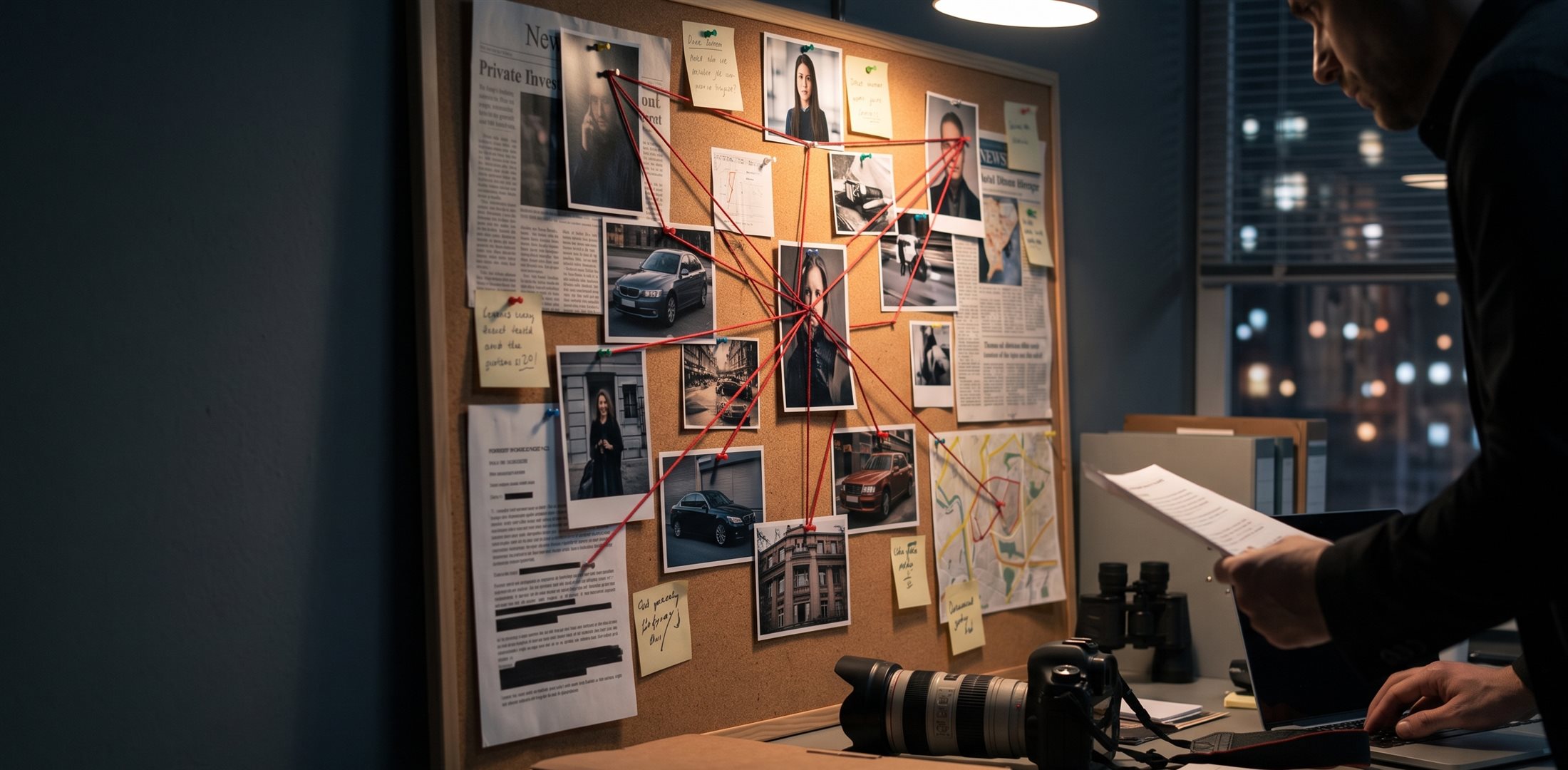
On repeated tenders a competitor comes in marginally below your figure. The pattern is too consistent to be judgement, which suggests your numbers are reaching him.

This is an enquiry into the theft of your information or deliberate damage to your operations, whether the source sits inside the company or outside it. It is for promoters, directors and legal heads who have seen their own material surface elsewhere.
Espionage cases are about information and damage rather than one person’s dishonest earnings. Drawings, formulations, tender figures, client lists, source code, pricing models or research reach a rival. Sometimes the loss is physical instead: machinery damaged before a delivery deadline, a batch spoiled, a site disrupted. The question we answer is how your material left, who moved it, and who outside was waiting for it.
Companies usually discover a leak indirectly. A competitor quotes against you with uncanny precision, a customer mentions a document he should never have seen, or a new product appears that is recognisably yours. By then the loss is in the past, the trail is cold and suspicion spreads through a department, which damages a working team almost as much as the theft did.
A structured enquiry replaces that suspicion with a narrower set of possibilities. We establish how the information could physically have travelled, who had access and opportunity, which outside party gained, and what connects the two. The written findings allow your board to act against those responsible, support a complaint or civil action, and close the route that was used before it is used again.
The pattern is usually noticed by a sales head, a plant manager or a promoter who realises that an outsider knows something only a handful of people inside should know.
On repeated tenders a competitor comes in marginally below your figure. The pattern is too consistent to be judgement, which suggests your numbers are reaching him.
A product with your dimensions, features or finish is launched by another firm. You need to establish how the drawings or samples left your plant.
A senior person resigns for a competitor, and afterwards you find files copied, records deleted or customers already approached. The weeks before he left have to be reconstructed.
Breakdowns, spoiled batches or disrupted work cluster around delivery deadlines. The timing is too convenient to treat as ordinary equipment failure or poor maintenance by the shift crew.
Your own clients are offered contracts that mirror yours clause by clause, which indicates that signed agreements have been handed to someone outside your own organisation.
Drug use, outside visitors or unauthorised activity on company premises exposes your organisation to reputational and legal risk, and may be encouraged by someone outside the company.
These cases are reconstructed backwards from the loss. We start with what reached the outside, then work towards the access and the people that made it possible.
With your team we establish exactly what information or asset was lost, when it was last secure, and in what form it has surfaced outside the company.
On your written authority we identify who legitimately held that material, who could reach it, and which physical or procedural routes out of the company existed.
We look at who benefited: the rival now holding your material, its recent recruitment from your firm, and any contact between it and people on your side.
Where a named person emerges, our investigators observe meetings and movements in public places to establish whether the suspected contact between the two sides genuinely exists.
You receive a written report on how the loss occurred and what supports each conclusion, together with the gaps in your arrangements that allowed it.
Work inside your organisation is done with the company’s written authority, and only on company premises, company property and company staff. Within that, our methods are enquiry, observation and examination of what you are entitled to examine. We will not hack any system, intercept calls or messages, enter a home, or obtain records from someone who has no right to sell them. We also do not entrap a suspect into an act he had not already undertaken.
Discretion matters more here than in most cases, because an announced investigation tells the leak to stop. We keep the circle of knowledge inside your company as small as you allow, usually a promoter and one legal or HR contact. Field investigators are briefed on tasks rather than on your identity or the commercial background, and the report goes to the person who engaged us, by email, post or collection at Vashi.
Before anything on your premises or systems, we confirm in writing that the company authorises the examination and holds the right to permit it.
A leak has two ends. We examine the internal route and the outside beneficiary, because one without the other rarely explains the loss.
We do not tap phones, read private accounts or enter private property. Evidence gathered that way would damage your position, not help it.
Alongside the findings we set out where your handling of drawings, quotations, exits and visitors left the opening that was used.
More than 10 years of work for companies and banks means we have reconstructed leaks before and know how these cases usually run.
From our Vashi head office our investigators work Mumbai’s business districts, Navi Mumbai and Thane, and reach other cities through our centres.
Every case is handled confidentially, with as few people informed as you wish, and we never disclose the names of the companies we act for.
A written report with dated photographs or video where relevant, distinguishing what is established from what remains a reasonable inference.
Often we can narrow it to a small group and, where the evidence allows, to one person. We do that by establishing who held the material, who had the opportunity to move it, and who outside gained from it, then testing the connection. We cannot guarantee a named culprit in every case, and we say so at the briefing rather than afterwards.
Only company-owned systems, and only with your written authority as the owner of those systems, since the employer holds the right to permit that examination. We do not touch personal devices or private accounts, and we do not intercept communications. Where forensic work on your systems is needed beyond our scope, we tell you plainly so you can arrange it.
The material is documented so that it can support a complaint, a civil action or a disciplinary decision. Whether any particular item is admitted is for the court or the investigating authority to decide, and no agency can promise that. What we can do is record how and when each finding was obtained, which is what makes it worth putting forward.
We would advise speaking to us first. An early confrontation usually ends with devices wiped, files deleted and the outside contact warned, which closes the routes that would have shown what happened. A short period of quiet enquiry before anyone is approached generally produces far more than an immediate accusation.
Yes. Alongside the findings we review the arrangements the loss travelled through: how drawings and quotations are circulated, who may carry what out of a plant, how exits and handovers are managed, and how visitors are handled. Closing those gaps is usually the part of the report a board acts on first.
Usually within a few days of the briefing, and sooner where a deadline or a tender makes it urgent. Call 1800 120 2464, message +91 99878 22404 on WhatsApp, or write to info@metroindiadetective.com. You can also brief us at our head office at Platinum Techno Park, Vashi, Navi Mumbai.
If your information is reaching a competitor, talk to us before anyone inside is accused. We will explain what a quiet enquiry can establish, what authority we need from you and what the report will cover.